


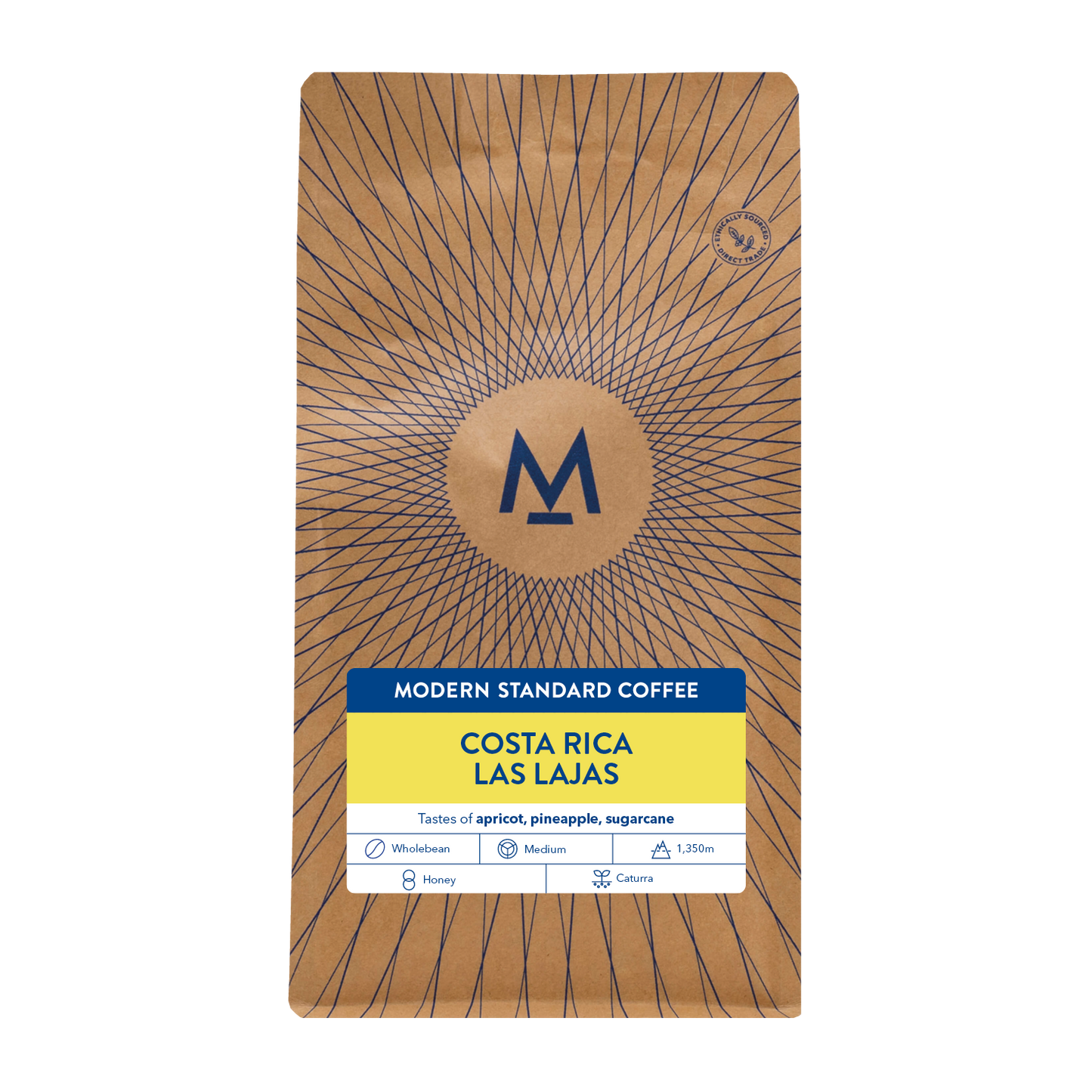
Costa Rica Las Lajas
Costa Rica Las Lajas
Shipping
Shipping
Free UK shipping on all orders over £30.
Letterbox-friendly packaging for orders of 1 or 2 bags of coffee.
See our Shipping Policy for more information.
Pickup
Pickup
Sorry, pickup availability is not accessible for this product.
Reviews
Reviews


The overview
| Countries of origin | Costa Rica |
| Producer | Las Lajas Micromill (Chacón Family) |
| Altitude | 1350m |
| Varietal | Caturra |
| Process | Honey |
The producer
Las Lajas Micromill is a family-run farm and mill in Costa Rica’s Central Valley, operated by the Chacón family. Known for their pioneering work with honey and natural processing, Las Lajas has become one of Costa Rica’s most respected producers, combining innovation with a strong commitment to environmental responsibility. The farm operates without the use of water in processing, relying instead on careful cherry handling and drying to minimise environmental impact.
The coffee
This honey-processed coffee is grown at elevations of 1,300–1,500 metres above sea level, where warm days and cool nights allow cherries to ripen slowly and evenly. After harvesting, the cherries are depulped and dried with varying amounts of mucilage still attached, giving the coffee its characteristic sweetness and texture. The result is a vibrant yet rounded cup, with layered sweetness, gentle fruit character and a smooth, lingering finish — a defining example of Costa Rica’s honey-processed style.
Why we love it
This coffee is really funky and bold, I love the fruitiness of it. If you want a coffee that's a bit out there, this is one to try.
Sarah's Brew Guide

Out: 31-33g
Time: 24-26s

Water: 305g
Ratio: 1:17


More about Solis & Cordero
Iván Gerardo Solís Rivera has been dedicated to everything coffee for over 20 years. This includes coffee growing, processing and quality control. In 2018 he started his Café Solis & Cordero project with his family and founded their own dry mill.
Solis & Cordero Micromill was founded in 2018 by the Solís Cordero family to help support smallholders in the Santos region. The mill provides a variety of services including cherry processing, selling specialty coffee to international destinations, selling roasted coffee in Costa Rica, consulting on processing and quality control, and export services. For smallholders working with Solis & Cordero, the mill helps them differentiate their coffee by maintaining farm-level traceability and by using innovative, quality-focused processing methods to further improve coffee.

About Tarrazú coffee
The Tarrazú region lies in the high mountains of the southern Pacific region south of Costa Rica’s capital city of San Jose and is one of the most densely planted high altitude regions in Central America, with many farms at or above 2000 meters above sea level. It is locally known as “Zona de Los Santos” for the number of towns with “San” or “Santa” in their names.
Tarrazú’s climate is characterized by two well-defined seasons; a rainy season lasting seven months (May through November) and a dry season (December through April). This encourages uniform coffee blossoming. On average, precipitation is between 2,400 millimeters (94.5 inches) per year, with an average annual temperature of 19°C (66.2°F).
The fertile, volcanic soils and rolling mountainsides of Tarrazu are well-suited for agriculture, and smallholders grow bananas, avocado, and citrus as well as coffee on properties passed between generations. The spirit of community and family is strong in Tarrazu, with producers caring for their land with pride. Many farms in Tarrazú include primary forest and some degree of shade trees interspersed with coffee and producers take care to protect the natural water sources that spring up from the mountainsides.




Latest journal posts
-

Espresso vs Filter: Which Coffee Should You Buy...
Espresso and filter coffee need different things from a bean. We explain the difference in roast, grind and flavour so you buy the right bag for how you actually brew.
Espresso vs Filter: Which Coffee Should You Buy...
Espresso and filter coffee need different things from a bean. We explain the difference in roast, grind and flavour so you buy the right bag for how you actually brew.
-

AeroPress Recipes: Five Ways to Brew It Differe...
One brewer, five very different cups. Try these practical AeroPress recipes for bright, strong, smooth and iced coffee.
AeroPress Recipes: Five Ways to Brew It Differe...
One brewer, five very different cups. Try these practical AeroPress recipes for bright, strong, smooth and iced coffee.
-

The Best Coffee Beans for Espresso at Home (And...
What actually makes a coffee good for espresso? We explain freshness, roast level and grind consistency, and how to choose beans that work well in a home machine.
The Best Coffee Beans for Espresso at Home (And...
What actually makes a coffee good for espresso? We explain freshness, roast level and grind consistency, and how to choose beans that work well in a home machine.


