


Pachamama
Pachamama
Shipping
Shipping
Free UK shipping on all orders over £30.
Letterbox-friendly packaging for orders of 1 or 2 bags of coffee.
See our Shipping Policy for more information.
Pickup
Pickup
Sorry, pickup availability is not accessible for this product.
Reviews
Reviews


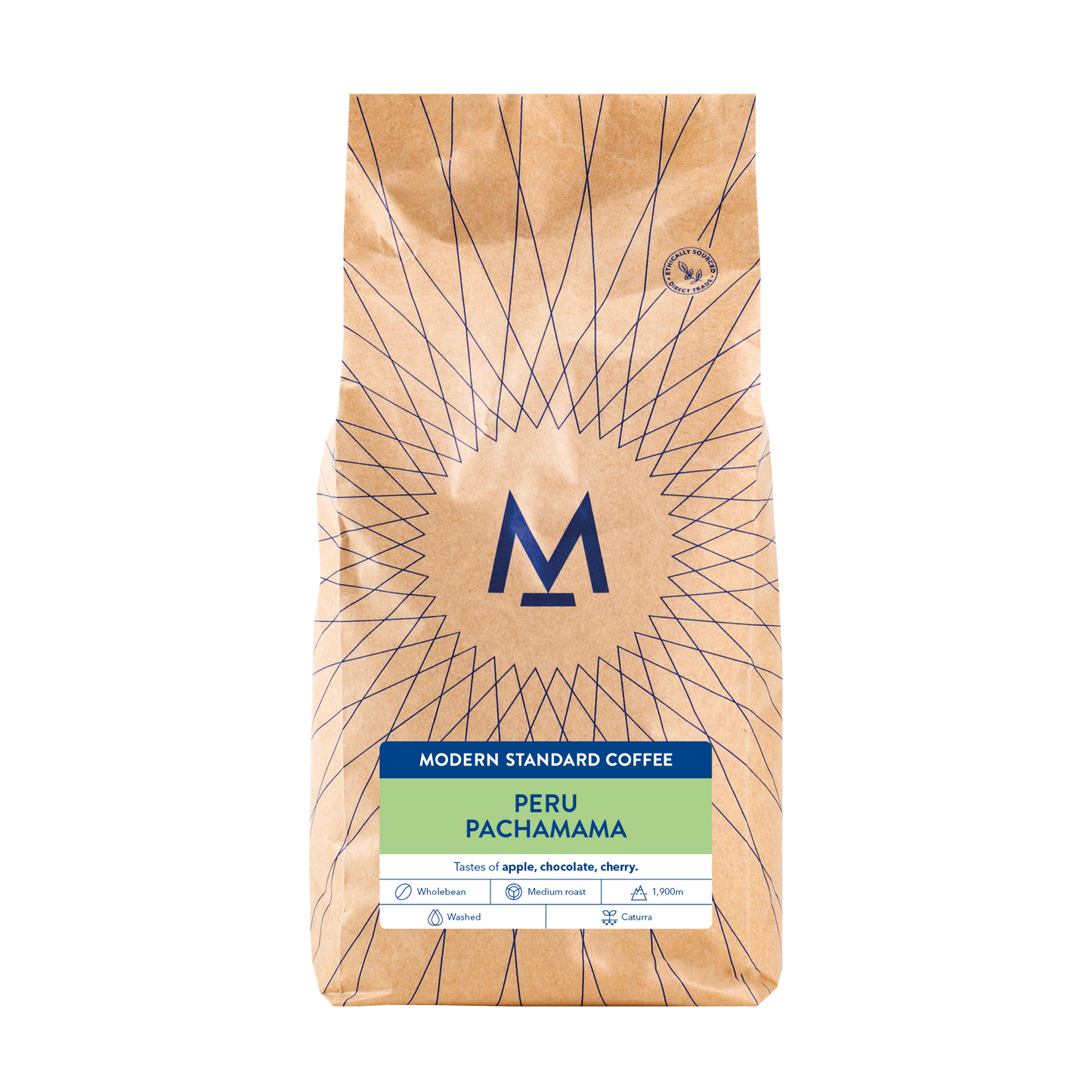
The overview
| Countries of origin | Peru |
| Producer | Pachamama |
| Altitude | 1900 - 2100m |
| Varietal | Caturra |
| Process | Washed |
The producer
Pachamama (meaning Mother Earth) is exclusively grown, farmed, harvested, processed by women, for every bag sold, we will donate £1 to Women's Aid in honour of International Women's Day.
The coffee
This coffee is produced on 9 different microlots, highlighting the work of Edith Pena, Mary Montejo and Petronila Lale. This coffee is grown amongst vanilla, sweet potatoes, peanuts and other plants to act as a secondary revenue for the growers. Each crop can also serve multiple purposes; fruit trees for shading the coffee plants and also timber. The neem tree also produces an oil that is naturally anti-fungal which can control coffee leaf rust, which is an ongoing problem for farmers.
The coffee cherry is pulped on member farms, and after selective handpicking the female producers float their cherries to remove under and over ripe cherries. They pulp the cherry and place it in plastic barrels to ferment anaerobically for approximately 18 hours.
Finally, they wash the parchment in clean water and lay it to dry in parabolic dryers.
The parchment coffee is raked frequently to ensure even drying and then it is hand sorted to remove any defective beans.
Why we love it
This coffee is more than just delicious; it does good too. £1 from each bag going to Women's Aid, and supporting a all female producer group is so important.
Caitlins's Brew Guide

Out: 31-33g
Time: 24-26s

Water: 305g
Ratio: 1:17


7 Elements x Pachamama
7 Elements are a green coffee exporter, with whom we have partnered to source this outstanding coffee.
Founded by Giorgio Piracci, a biologist specializing in technologies, he began working with the Yanesha Indigenous community while studying environmental conservation in Oxapampa, Peru in 2005.
7 Elements promotes permaculture techniques to help farmers achieve higher income security. Following the ideology of permaculture, 7 Elements reinvests surplus profits in the program for the benefit of everyone involved.
7 Elements commits to paying double the market price for coffee. As word of the program’s success for farmers spreads through communities, more and more youth are now expressing hope that agriculture offers them an opportunity for a successful future, Giorgio reports.

Peruvian Coffee
Peru holds exceptional promise as a producer of high-quality coffees. The country is the largest exporter of organic Arabica coffee globally. With extremely high altitudes and fertile soils, the country’s smallholder farmers also produce some stunning specialty coffees.
Though coffee arrived in Peru in the 1700s, very little coffee was exported until the late 1800s. Until that point, most coffee produced in Peru was consumed locally. When coffee leaf rust hit Indonesia in the late 1800s, a country central to European coffee imports at the time, Europeans began searching elsewhere for their fix. Peru was a perfect option.
Between the late 1800s and the first World War, European interests invested significant resources into coffee production in Peru. However, with the advent of the two World Wars, England and other European powers became weakened and took a less colonialist perspective. When the British and other European land owners left, their land was purchased by the government and redistributed to locals. The Peruvian government repurchased the 2 million hectares previously granted to England and distributed the lands to thousands of local farmers. Many of these farmers later grew coffee on the lands they received.
Today, Peruvian coffee growers are overwhelmingly small scale. Farmers in Peru usually process their coffee on their own farms. Most coffee is Fully washed. Cherry is usually pulped, fermented and dried in the sun on raised beds or drying sheds. Drying greenhouses and parabolic beds are becoming more common as farmers pivot towards specialty markets.



Latest journal posts
-

How to Store Coffee Beans Properly (Fridge, Fre...
Should you keep coffee beans in the fridge, freezer or cupboard? We explain what actually makes coffee lose its freshness, the best way to store it at home, and when...
How to Store Coffee Beans Properly (Fridge, Fre...
Should you keep coffee beans in the fridge, freezer or cupboard? We explain what actually makes coffee lose its freshness, the best way to store it at home, and when...
-

Scotland's Speciality Coffee Roasters: An Hones...
Looking for great coffee roasted in Scotland? We take an honest look at some of Scotland's speciality coffee roasters, from Edinburgh and Glasgow to our own roastery in Fife, plus...
Scotland's Speciality Coffee Roasters: An Hones...
Looking for great coffee roasted in Scotland? We take an honest look at some of Scotland's speciality coffee roasters, from Edinburgh and Glasgow to our own roastery in Fife, plus...
-

Why Does My Coffee Taste Bitter? (And How to Fi...
Coffee tasting harsh or bitter? It's almost always fixable. Here's what's actually causing it, and the five changes that work.
Why Does My Coffee Taste Bitter? (And How to Fi...
Coffee tasting harsh or bitter? It's almost always fixable. Here's what's actually causing it, and the five changes that work.


