


Beshasha
Beshasha
Shipping
Shipping
Free UK shipping on all orders over £30.
Letterbox-friendly packaging for orders of 1 or 2 bags of coffee.
See our Shipping Policy for more information.
Pickup
Pickup
Sorry, pickup availability is not accessible for this product.
Reviews
Reviews


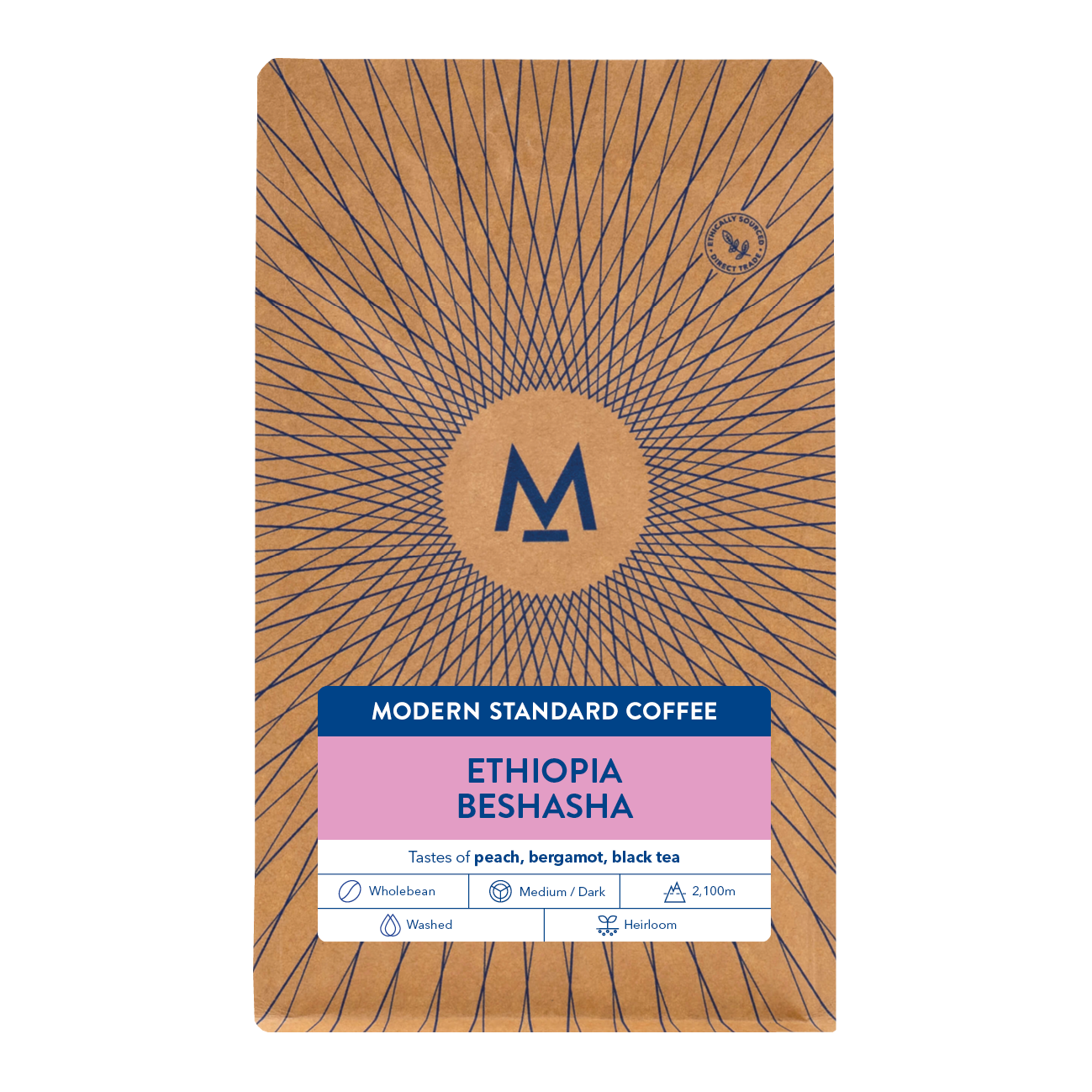
The overview
| Countries of origin | Ethiopia |
| Producer | Beshasha |
| Altitude | 1860 - 2160m |
| Varietal | Heirloom |
| Process | Washed |
The coffee
Grown in the highlands of south-western Ethiopia, the Beshasha lot comes from smallholder farmers delivering cherries to the Beshasha washing station in the Jimma zone. The station works closely with surrounding communities to process carefully selected cherries, paying premiums above local market rates to reward quality and consistency. Sitting at elevations of around 1,900–2,100 metres above sea level, the area’s fertile soils and cool climate create ideal conditions for slow cherry maturation, contributing to the coffee’s clarity and balance.
Coffee in Beshasha is cultivated organically under native forest shade, using traditional low-input farming methods passed down through generations. Cherries are selectively handpicked at peak ripeness before being delivered to the washing station, where they are depulped and fermented in water for 36–48 hours. After fermentation, the coffee is thoroughly washed and dried slowly on raised beds, allowing for careful moisture control before resting and final preparation for export.
The Beshasha washing station plays an important role beyond processing, acting as a hub for farmer support and knowledge sharing. By focusing on quality-driven washed coffees, the station helps farmers access specialty markets while preserving the region’s long-standing coffee-growing traditions. This lot reflects the clean, elegant profile typical of washed coffees from south-western Ethiopia, shaped by both the region’s terroir and the care taken at every stage of production.
Why we love it
Ethiopian coffees is one of my favourites to drink; full of floral notes and sweetness.
Calum's Brew Guide

Out: 31-33g
Time: 24-26s

Water: 305g
Ratio: 1:17
This coffee also makes for a delicious cold brew!


Ethiopia coffee
Ethiopia’s long coffee history predates written records. Arabica plants are native to Ethiopia, and many of the Arabica varieties now cultivated worldwide have their genetic roots in wild coffee growing in Ethiopian forests. With such easy access to wild-growing coffee, it is undoubtable that early people in Ethiopia consumed coffee for centuries before it became the global beverage that it is today.
The long tradition of coffee in Ethiopia has continued into the modern day. Coffee drinking is widespread in both social and cultural contexts and has a place at a wide range of social events. Nearly half of all coffee produced in the country is consumed on the domestic market. That’s no small feat for a country that produces some 860 million pounds of green coffee beans annually.
Coffee also provides the main income for up to 25% of the population. More than 15 million people grow coffee as their major cash crop. The Ethiopian government also depends on coffee to generate between 25 and 35% of total annual export earnings.






Latest journal posts
-

The Best Coffee Beans for Espresso at Home (And...
What actually makes a coffee good for espresso? We explain freshness, roast level and grind consistency, and how to choose beans that work well in a home machine.
The Best Coffee Beans for Espresso at Home (And...
What actually makes a coffee good for espresso? We explain freshness, roast level and grind consistency, and how to choose beans that work well in a home machine.
-

The Best Decaf Coffee UK: What Good Decaf Actua...
Decaf coffee has come a long way. We explain what good decaf should actually taste like, how sugarcane decaffeination works, and why choosing better coffee in the first place makes...
The Best Decaf Coffee UK: What Good Decaf Actua...
Decaf coffee has come a long way. We explain what good decaf should actually taste like, how sugarcane decaffeination works, and why choosing better coffee in the first place makes...
-

How to Store Coffee Beans Properly (Fridge, Fre...
Should you keep coffee beans in the fridge, freezer or cupboard? We explain what actually makes coffee lose its freshness, the best way to store it at home, and when...
How to Store Coffee Beans Properly (Fridge, Fre...
Should you keep coffee beans in the fridge, freezer or cupboard? We explain what actually makes coffee lose its freshness, the best way to store it at home, and when...


