


El Embrujo Microlot
El Embrujo Microlot
Shipping
Shipping
Free UK shipping on all orders over £30.
Letterbox-friendly packaging for orders of 1 or 2 bags of coffee.
See our Shipping Policy for more information.
Pickup
Pickup
Sorry, pickup availability is not accessible for this product.
Reviews
Reviews
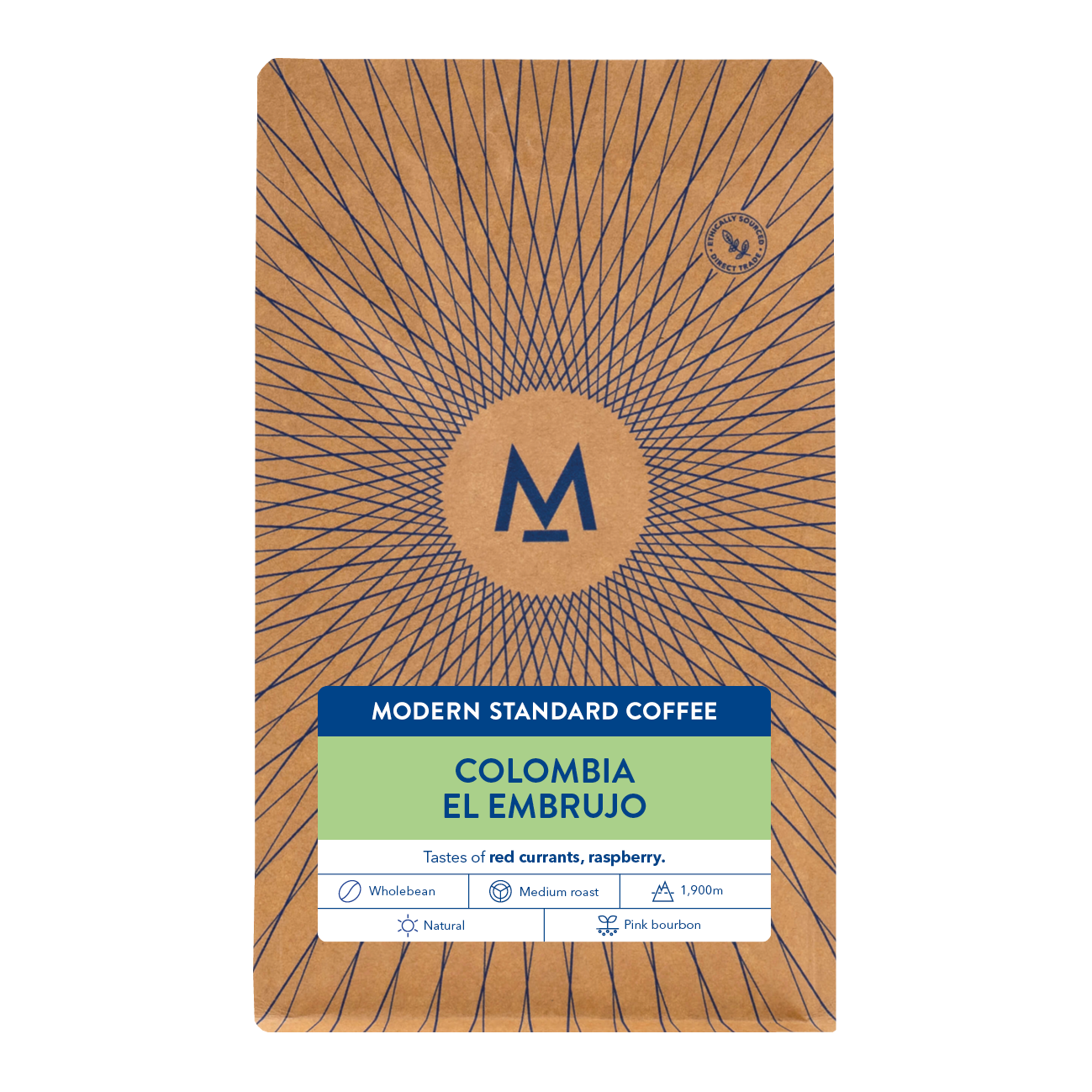

The overview
| Countries of origin | Colombia |
| Producer | Edimer Penna |
| Altitude | 1450 - 1900m |
| Varietal | Pink bourbon |
| Process | Natural |
The producer
Finca La Palmera has been family-owned for over 50 years, beginning when Ignacio Rodriguez’s father purchased the farm’s original 12 hectares. Through years of dedication and hard work, the farm expanded steadily, reaching 170 hectares by the time Ignacio took over. Today, Ignacio continues this legacy with a focused commitment to producing specialty-quality coffee, combining scale with close attention to detail across the farm.
The coffee
Coffee cherries are selectively handpicked, with harvesting overseen by a patrón to ensure only fully ripe, red cherries are collected. To encourage quality-focused picking, harvesters are paid above the local average rate. Once delivered to the on-site processing facility, cherries are floated to remove underripe and overripe fruit, then passed along moving belts where further hand-sorting removes any damaged cherries.
The selected cherries are fermented for between 36 and 120 hours, depending on ambient conditions, before being dried using mechanical dryers. This controlled drying method allows for consistency and precision at scale. After drying, the coffee is rested in GrainPro bags to stabilise before final preparation and export, resulting in a clean, well-structured cup that reflects the care taken throughout the process.
Why we love it

This is a beautifully elegant coffee. It has vibrant aromatics, a light, delicate body and a really clean finish. Geisha is such a distinctive variety, and Rodrigo’s attention to detail allows its clarity and complexity to shine through.
Lee's Brew Guide

Out: 31-33g
Time: 24-26s

Water: 305g
Ratio: 1:17
This washed Geisha is delicate and aromatic, so use freshly boiled water that has cooled slightly and pour gently to preserve its clarity. Expect a light, elegant cup with vibrant aromatics and a clean, lingering finish.

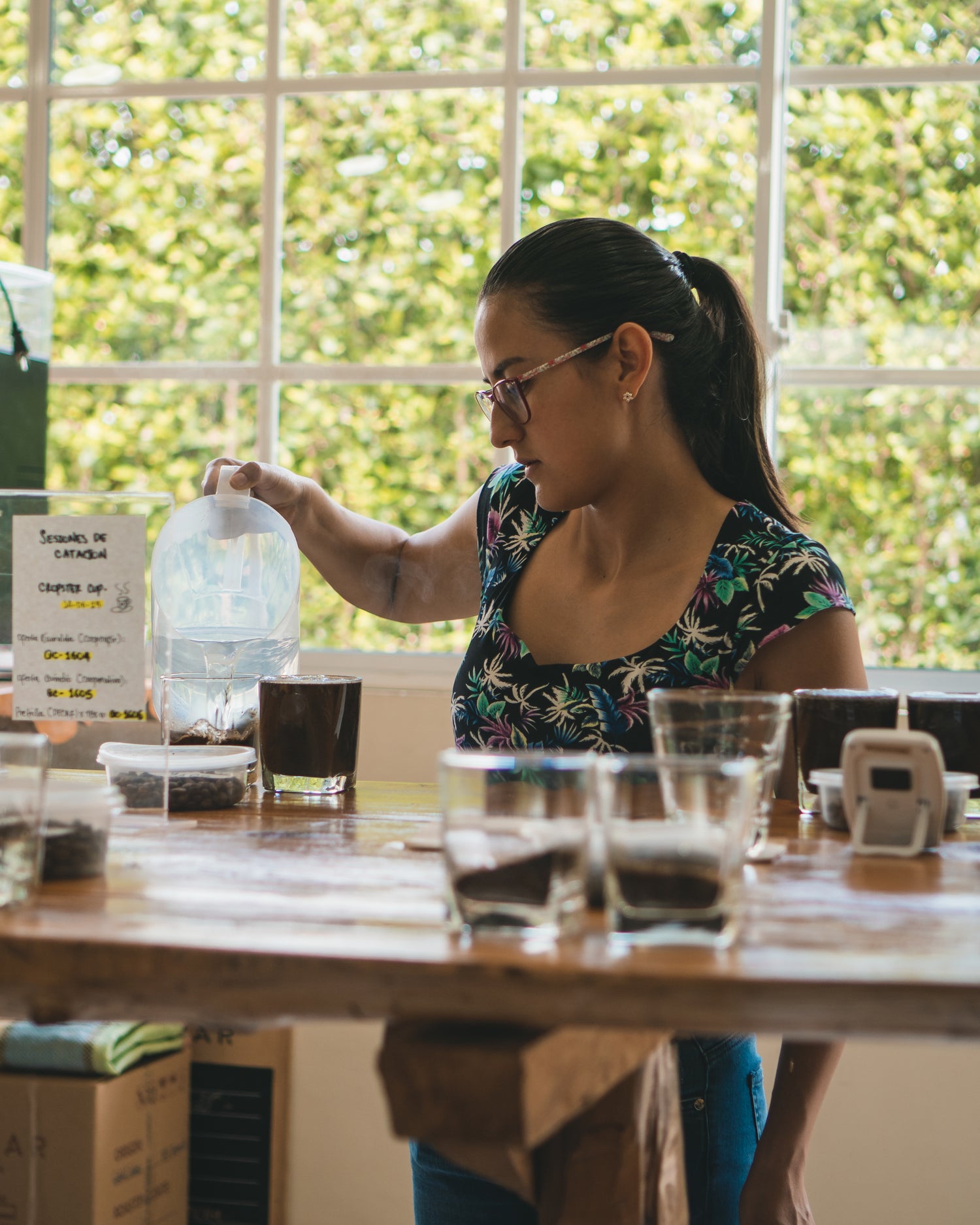
Rodrigo Oyuela Geisha
Rodrigo Oyuela comes from a coffee-growing family and has worked with coffee since childhood. Over the years, he has developed a reputation as a skilled grower and community leader in Colombia. He is the founder and president of COAGROHERMOSAS, an association supporting coffee producers in the Cañón de las Hermosas area.
Rodrigo previously managed a local coffee purchasing point and wet mill before buying his own farm, Villamaria. Without the money to purchase the farm outright, he reached an agreement with its previous owner that allowed him to pay for it gradually through the sale of his coffee. The need to improve the farm’s productivity encouraged Rodrigo to develop his agronomic knowledge and explore distinctive varieties with exceptional flavour potential.
Villamaria covers approximately 33.5 hectares, with eight hectares currently planted with coffee. Across the farm, Rodrigo grows around 38,000 coffee trees, including both established Colombian varieties and more unusual, carefully selected cultivars.
Quality begins with harvesting. Rodrigo pays close attention to cherry ripeness and rewards his pickers for selecting fruit at its optimum stage, avoiding green or underripe cherries. This careful selection helps create greater sweetness, clarity and consistency in the finished cup.
This Geisha is grown at high altitude, where cooler temperatures allow the cherries to mature slowly and develop greater aromatic complexity. Following harvest, the coffee is washed and carefully dried to preserve the variety’s delicate character. The result is an elegant, expressive coffee with vibrant aromatics, a light body and a clean, lingering finish.

Colombia Coffee
Colombia has been producing and exporting coffees renowned for their full body and bright acidity since the early 19th century. Thanks to its wide range of coffee growing regions, microclimates, and altitudes, Colombia is harvesting throughout the year.
Colombia boasts a wide range of microclimates and geographical conditions that produce the unique flavours so loved in Colombian coffees. While there are many sub-regions and progressively smaller geographical designations—all the way down to individual farms—broadly speaking, coffees in Colombia can be separated into three major regions whose climate, soils and altitudes affect tastes.





Latest journal posts
-

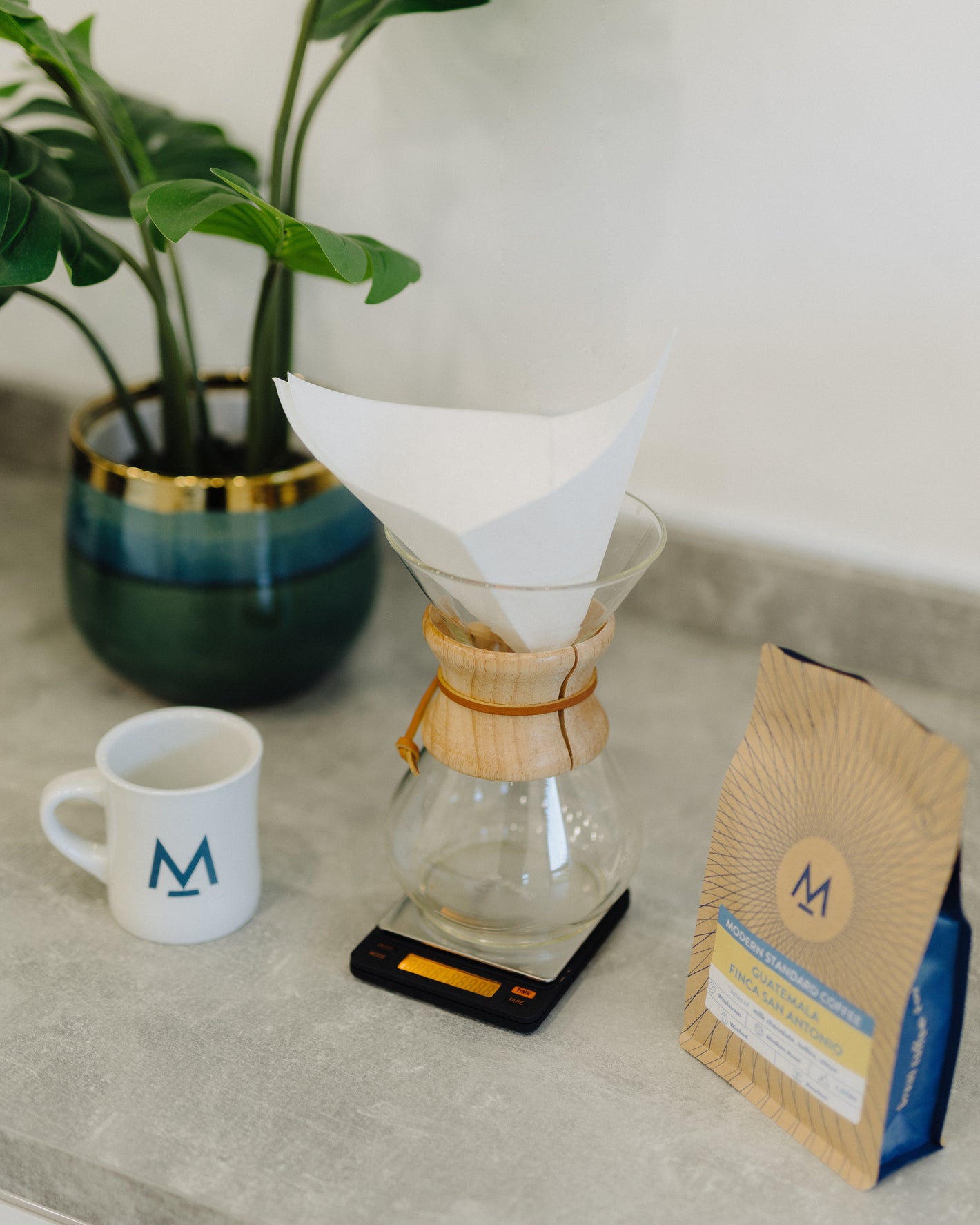
How to Choose the Right Coffee Grinder for Home...
A good grinder matters more than a fancy machine. We explain burr versus blade, why grind consistency is everything for espresso, and how to buy the right grinder for your...
How to Choose the Right Coffee Grinder for Home...
A good grinder matters more than a fancy machine. We explain burr versus blade, why grind consistency is everything for espresso, and how to buy the right grinder for your...
-

Espresso vs Filter: Which Coffee Should You Buy...
Espresso and filter coffee need different things from a bean. We explain the difference in roast, grind and flavour so you buy the right bag for how you actually brew.
Espresso vs Filter: Which Coffee Should You Buy...
Espresso and filter coffee need different things from a bean. We explain the difference in roast, grind and flavour so you buy the right bag for how you actually brew.
-

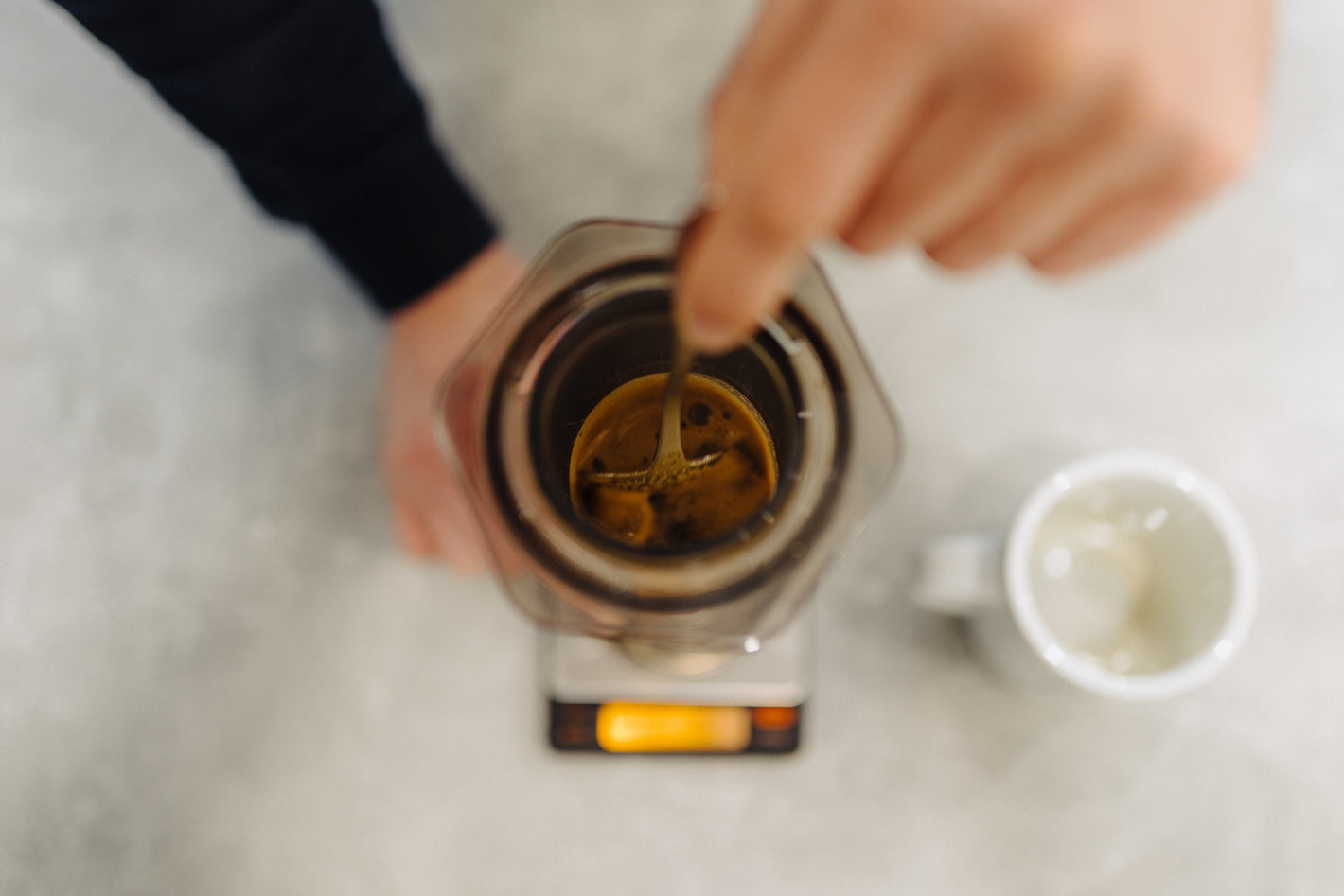
AeroPress Recipes: Five Ways to Brew It Differe...
One brewer, five very different cups. Try these practical AeroPress recipes for bright, strong, smooth and iced coffee.
AeroPress Recipes: Five Ways to Brew It Differe...
One brewer, five very different cups. Try these practical AeroPress recipes for bright, strong, smooth and iced coffee.


