


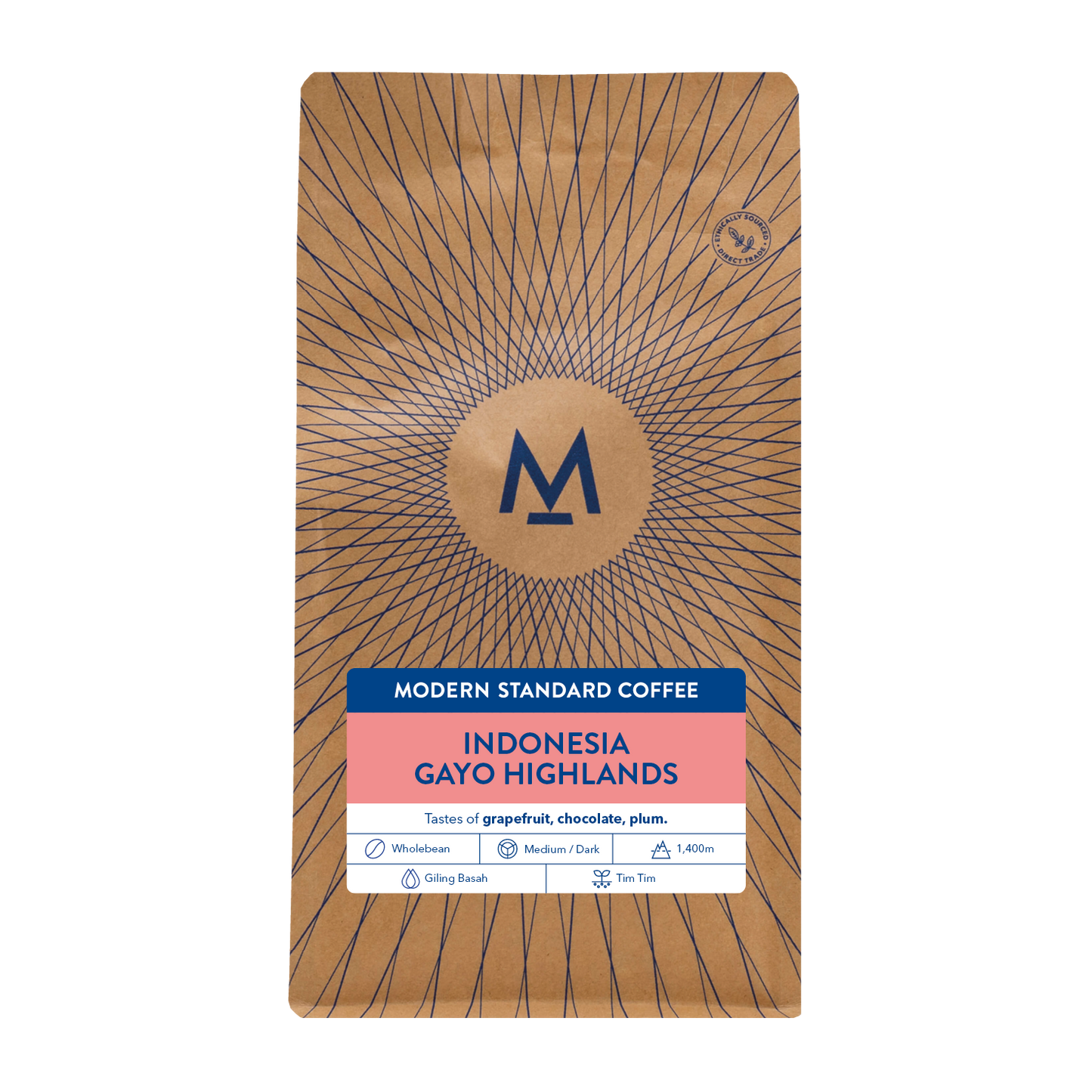
Indonesia Gayo Highlands
Indonesia Gayo Highlands
Shipping
Shipping
Free UK shipping on all orders over £30.
Letterbox-friendly packaging for orders of 1 or 2 bags of coffee.
See our Shipping Policy for more information.
Pickup
Pickup
Sorry, pickup availability is not accessible for this product.
Reviews
Reviews


The overview
| Countries of origin | Indonesia |
| Altitude | 1400m |
| Varietal | Tim Tim |
| Process | Washed |
The coffee
Expect a full‑bodied cup with plush texture and mellow sweetness. Think dark chocolate, cedar, warm spice and a hint of herbal earthiness, with low acidity and a long, smooth finish. It’s ideal when you want something comforting and substantial rather than bright or citrusy — perfect for cooler mornings, milk drinks, or any time you crave a coffee with real weight.
The producer and region
The Gayo Highlands sit in central Aceh, surrounded by the Bukit Barisan mountain range. It’s an isolated, high‑elevation area with rich volcanic soils and dense forest, where coffee has been grown for generations. Local guidance notes the region’s mountainous terrain and its separation from coastal plains by the surrounding range.
Coffee here is primarily an Arabica smallholder crop. Farmers work alongside local cooperatives and producers who uphold the traditions of the region, bringing attention to quality, community, and the unique identity of Gayo coffee.
Why wet‑hulled?
Wet hulling, or Giling Basah, is the distinctive Indonesian method that shapes this coffee’s signature profile. It involves pulping, short fermentation, washing, then drying to a higher moisture before hulling — earlier than in washed or natural methods. The beans are hulled while still semi‑dry, then finished to stable moisture.
The result is a cup with:
-
Heavier mouthfeel and syrupy body
-
Lower, softer acidity
-
Earthy, savoury complexity with subtle spice and herbal notes
It’s a labour‑intensive process and one tied to Indonesia’s climate and history, but it creates a coffee experience like no other.
Why we love it
Indonesian coffees are earthy, full bodied and bangs of sweetness.
Calum's Brew Guide

Out: 31-33g
Time: 24-26s

Water: 305g
Ratio: 1:17
This coffee also makes for a delicious cold brew!


Indonesian coffee
Indonesia’s coffee history stretches back more than 300 years, beginning with Dutch colonial plantings in the late 17th century. While Arabica is not native to Indonesia, the country’s diverse geography — volcanic soils, high altitudes, and humid tropical climate — has made it one of the world’s most distinctive coffee-producing regions. Today, Indonesia is best known for its unique processing methods, particularly wet-hulling (locally known as giling basah), which contributes to the deep, earthy and full-bodied profile Indonesian coffees are famous for.
Coffee remains deeply embedded in Indonesian rural life and continues to play a vital economic role. Around 90% of coffee production comes from smallholder farmers, many working plots of less than two hectares. Indonesia produces roughly 660 million pounds of green coffee annually, making it one of the largest producers globally. A significant portion is consumed domestically, reflecting a strong and growing coffee culture, while exports provide critical income for millions of farming families across regions such as Sumatra, Java, Sulawesi and Flores.





Latest journal posts
-

Espresso vs Filter: Which Coffee Should You Buy...
Espresso and filter coffee need different things from a bean. We explain the difference in roast, grind and flavour so you buy the right bag for how you actually brew.
Espresso vs Filter: Which Coffee Should You Buy...
Espresso and filter coffee need different things from a bean. We explain the difference in roast, grind and flavour so you buy the right bag for how you actually brew.
-

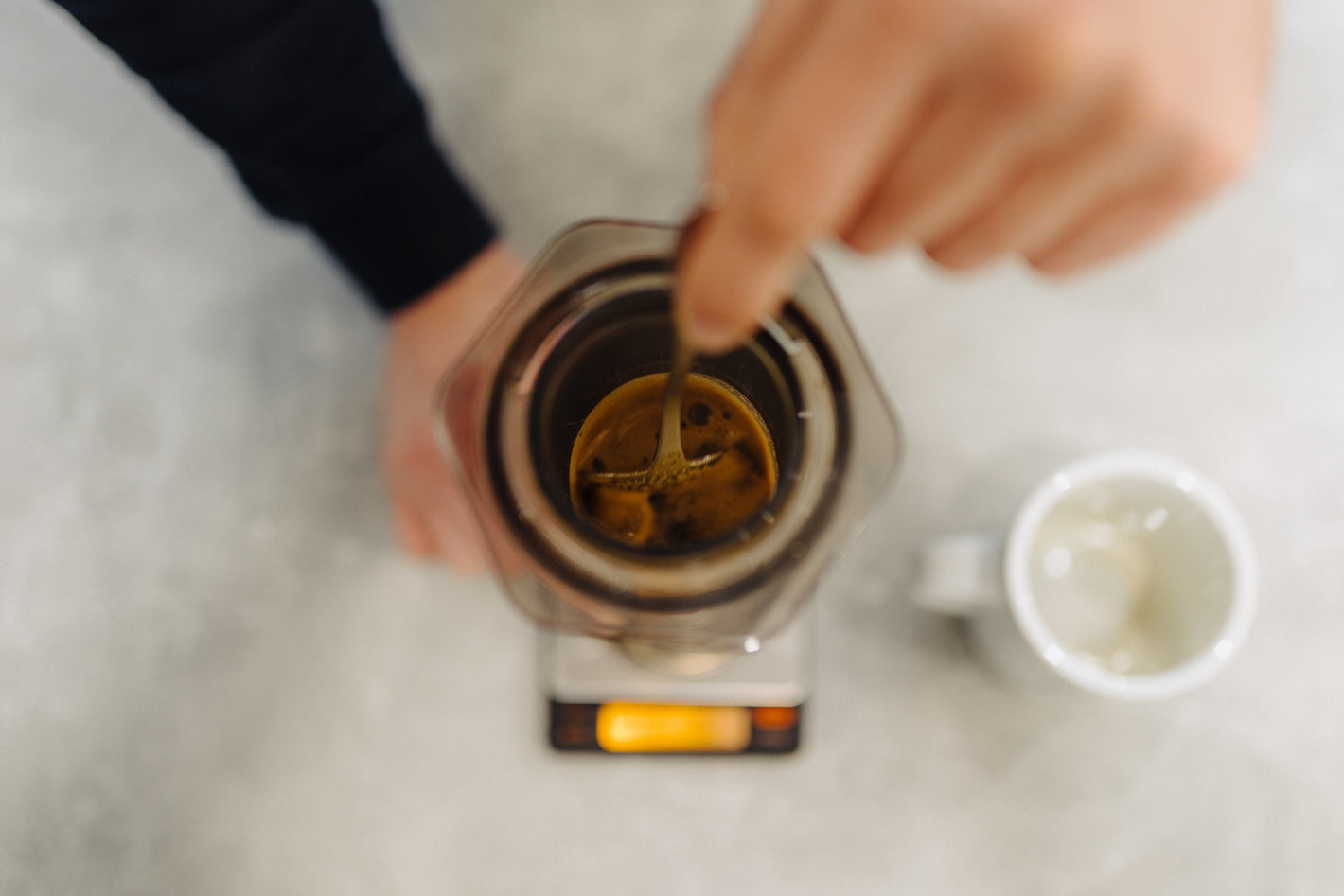
AeroPress Recipes: Five Ways to Brew It Differe...
One brewer, five very different cups. Try these practical AeroPress recipes for bright, strong, smooth and iced coffee.
AeroPress Recipes: Five Ways to Brew It Differe...
One brewer, five very different cups. Try these practical AeroPress recipes for bright, strong, smooth and iced coffee.
-

The Best Coffee Beans for Espresso at Home (And...
What actually makes a coffee good for espresso? We explain freshness, roast level and grind consistency, and how to choose beans that work well in a home machine.
The Best Coffee Beans for Espresso at Home (And...
What actually makes a coffee good for espresso? We explain freshness, roast level and grind consistency, and how to choose beans that work well in a home machine.


